Fourth Sunday in Lent, 2021

The Fourth Sunday in Lent will be celebrated in a Latin Solemn High Mass at St. Stanislaus Church in New Haven on March 14, at 2:00 pm. The celebrant will be Father Richard Cipolla, Pastor emeritus of St. Mary’s Church, Norwalk; the deacon will be Father Robert L. Turner; and the subdeacon will be Mr. William V. Riccio, Jr.

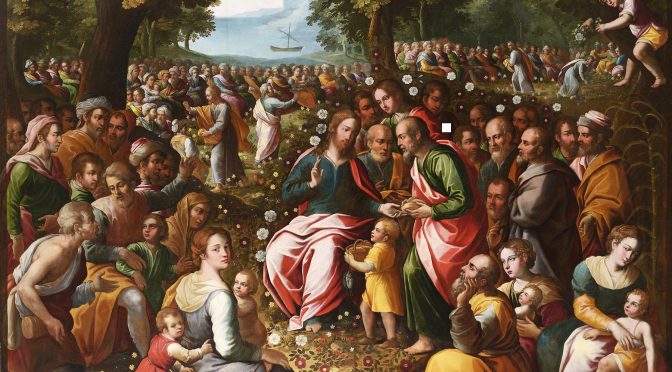
Laetare Sunday marks the midpoint of the season of Lent in preparation for the great feast of Easter. On this day the Church takes “time out” from the penitential emphasis in the texts of the liturgy in Lent to encourage Christians with the reminder of the great reward of Christ’s redemptive presence in the world. The opening Introit at Mass “Laetare, Jerusalem” exhorts us as citizens of the New Jerusalem to rejoice as we enter the house of the Lord; the Epistle encourages us to rejoice in Christ as the true Moses who has released us from the bondage of the law and sin; and the Gospel, presenting the miracle of the multiplication of loaves and fishes, reminds us to rejoice in the Eucharist, which is the figure of the heavenly banquet.

This spirit of rejoicing is reflected in the use of rose-colored vestments and the organ on this Sunday. Fortified by this liturgy filled with thought of Easter, let us go forward in the second half of Lent with courage and generosity in our penance, prayer and charitable works.

Music for the service performed by the Schola Cantorum of the St. Gregory Society, will include the English Renaissance master William Byrd’s “Mass for Three Voices” and motets “Memento salutis auctor” and “Ave verum Corpus”; the chant proper for the Mass (Laetare); and organ music by Byrd and Orlando Gibbons.
Quinquagesima Sunday 2021

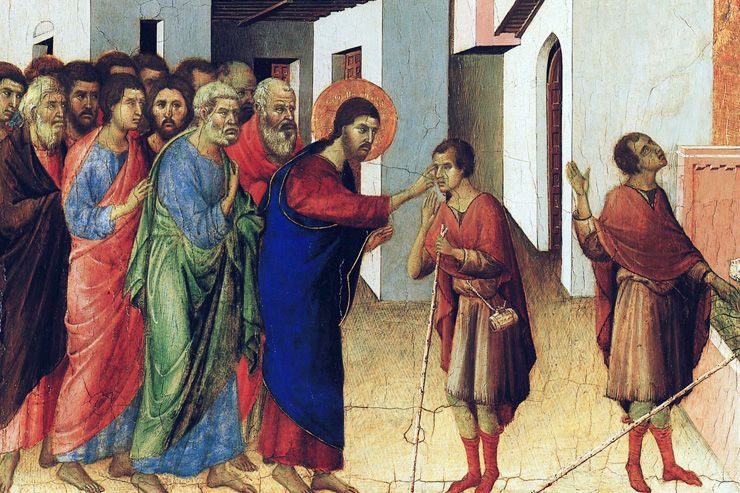
Duccio di Buoninsegna, Jesus open eyes of man born blind

Quinquagesima Sunday will be celebrated in a traditional Latin High Mass at St. Stanislaus Church, New Haven, Sunday, February 14, at 2:00 pm. The celebrant will be the Father Jan Pikulski.

The third of the Sundays preparing us for the fast of Lent, Quinquagesima, on the fiftieth day before Easter, signals that Ash Wednesday is close at hand. The great Benedictine abbot, Dom Prosper Guéranger, speaks of Quinquagesima as a “time of Abraham” because of Abraham’s “docility and devotedness in following the call of his God.”

In the Gospel of St. Luke on this day, our Lord prepares His apostles for His coming sufferings, that is, His sacred Passion in Jerusalem. The blind man represents the sinners who break their relationship with God, rejecting the offer of the promises of the Kingdom because of fallen man’s own selfishness in pride. The cry of the blind man is our cry, too: “Jesus, Son of David, have mercy on me!”. This prayer moved the heart of Jesus who stopped, called him, and healed him. This personal encounter prompted our Lord to ask the blind man to name the desire of his heart: “What do you want me to do for you?” the Lord asks him. “Master, let me receive my sight,” the blind man answers. “Go your way, your faith has saved you.”

Quinquagesima Sunday invites us to ask for the grace that the blind man had been given: sufficient awareness to beg for the Lord’s mercy in hearing our prayers for forgiveness of sins so that we may live in perfect freedom. Are we as Catholics prepared to be docile and devoted, like Abraham, like the blind man, before the promptings of the Holy Trinity?

Music for the service performed by members of the Schola Cantorum of the St. Gregory Society, will include the Gregorian chant ‘Missa Orbis factor’ (Vatican edition XI), the chant proper for the Mass (Esto mihi), the antiphon “Ave Regina coelorum” and the responsory, “Media vita.”